Porcelain vs Composite Veneers
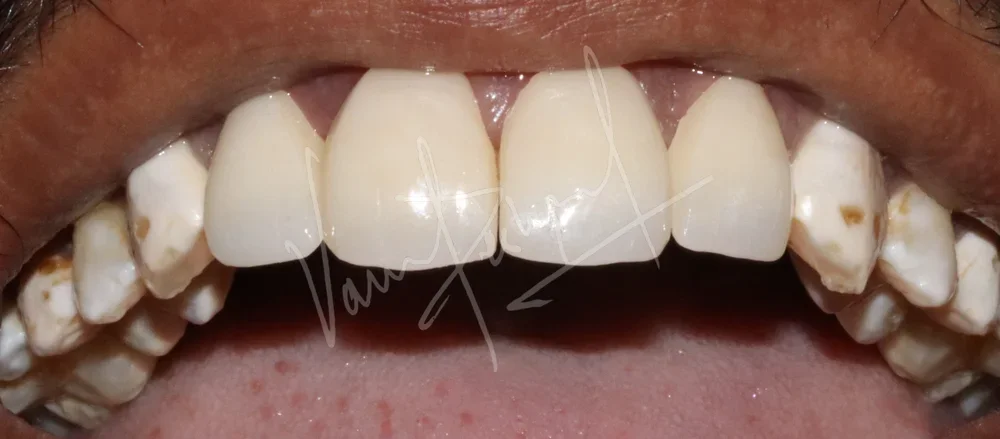
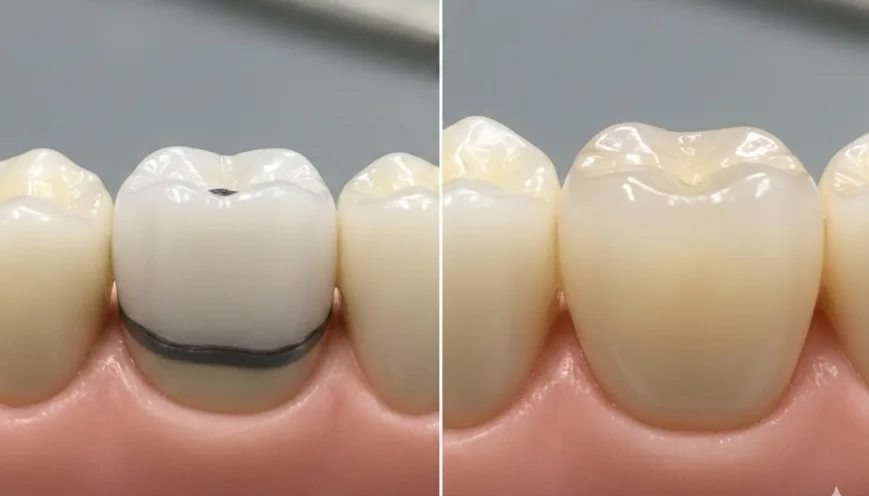
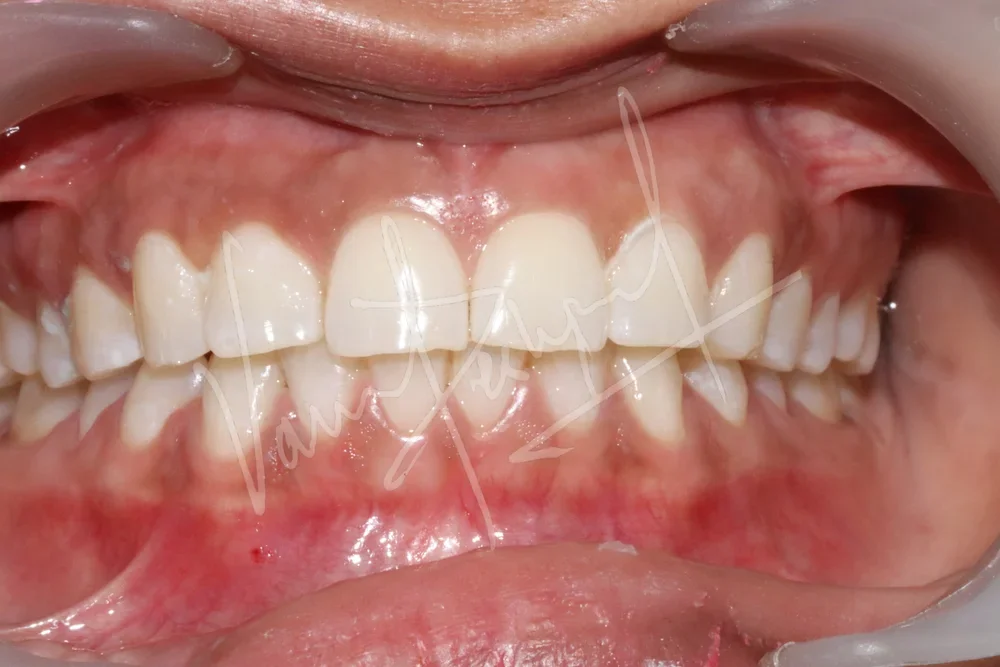
Both types of veneer cover the visible front of a tooth to improve selected chips, discolouration, uneven shapes or small gaps. Composite veneers are made of tooth-coloured resin that can be built up and shaped directly on the tooth (the direct method), and may need less enamel removed, but they can stain and wear and may need repair over time. Porcelain veneers are thin ceramic shells made to fit after the tooth is prepared, then bonded in place. Which one suits you depends on your teeth, your bite, how much tooth would need to be removed and what you want from the result.
What is the difference between porcelain and composite veneers?
A veneer covers only the front of a tooth, unlike a crown, which covers the whole tooth (American Dental Association: veneers). The two types differ in material and in how they are made.
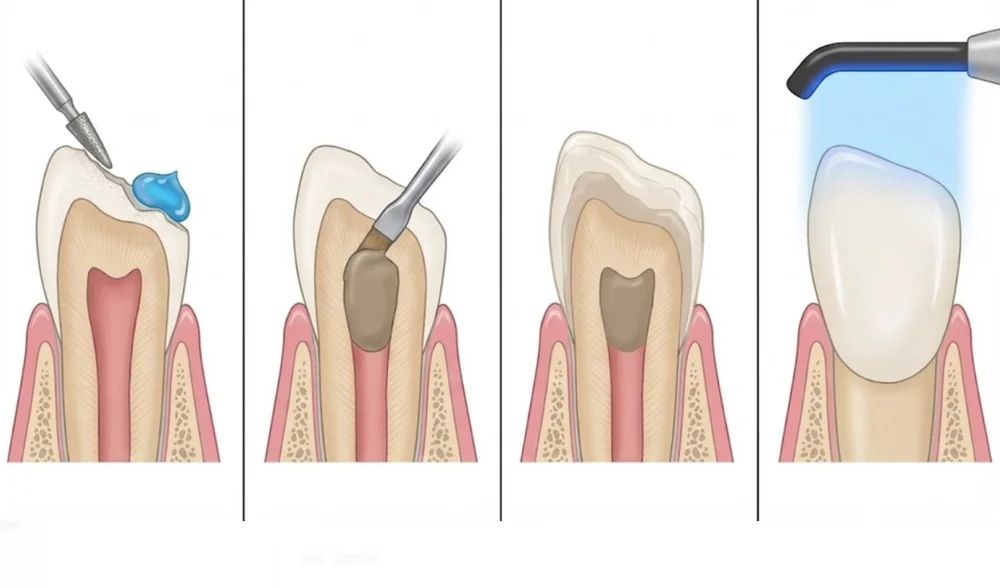
Composite veneers use the same kind of tooth-coloured resin used for fillings, bonded to the tooth surface. With the direct method, the dentist builds up the resin on your tooth, shapes it, hardens it with a curing light and polishes it. There is also a "direct-indirect" method, in which the veneer is shaped on the tooth, then removed and finished outside the mouth before being bonded back on (Journal of Esthetic and Restorative Dentistry).
Porcelain veneers are ceramic shells. The tooth is prepared first, then an impression or 3D scan is taken so the veneer can be made to fit. The dentist checks the fit and shape before the shell is bonded to the tooth.
Porcelain vs composite veneers at a glance
| What you are comparing | Composite veneers | Porcelain veneers |
|---|---|---|
| Material | Tooth-coloured resin | Thin ceramic (porcelain) shell |
| How it is made | Can be built up, shaped and hardened directly on the tooth (direct method) | Made to fit from an impression or scan after the tooth is prepared |
| Enamel removal | May need less than porcelain, depending on the case | Some enamel is usually removed to make room for the shell |
| Can it be undone? | Not automatically; depends on how much tooth is prepared | Often not reversible once enamel has been removed |
| Staining and wear | Can stain and wear, and may need repair | Ask your dentist how chips or damage would be handled |
| Problems any veneer can have | Can loosen or cause hot or cold sensitivity; decay can form around it | Can loosen or cause hot or cold sensitivity; decay can form around it |
| Fit check | With the direct method, shaped and polished on the tooth during placement | Fit and shape checked before bonding |
Which removes less tooth, and can either be undone?
It depends on the technique, not just the material. Composite veneers may need less enamel removed than porcelain, but this varies from case to case, and a composite veneer is not automatically reversible.
With porcelain, enough of the tooth is prepared to make space so the veneer is not too bulky; how much depends on the tooth and the planned result. Removed enamel does not grow back, and many veneer treatments cannot be reversed. Labels such as "no-prep" or "minimal-prep" do not settle the question on their own either (Cleveland Clinic: dental veneers). Ask your dentist exactly how much tooth will be removed for the option you are considering.
Which lasts longer, and which costs more?
No one can promise a fixed lifespan or a set price difference for either type. Composite can stain and wear and may need repair. Any veneer can loosen or cause sensitivity, and decay can still form around or beneath it, so neither is maintenance-free.
The estimate depends on things such as the material chosen, how many teeth are treated, whether decay or gum disease needs treating first, and any repairs needed later. Ask for a written estimate that shows what is included.
Who is a good candidate for veneers?
For any veneer, the tooth underneath must be suitable for restoration. Porcelain veneers may restore appearance when much of the tooth is still intact (American College of Prosthodontists: veneers). Before any veneer:
- Decay and gum disease need treating first.
- Grinding, clenching or a deep bite can limit whether veneers are suitable. This is not always a definite no, but it matters.
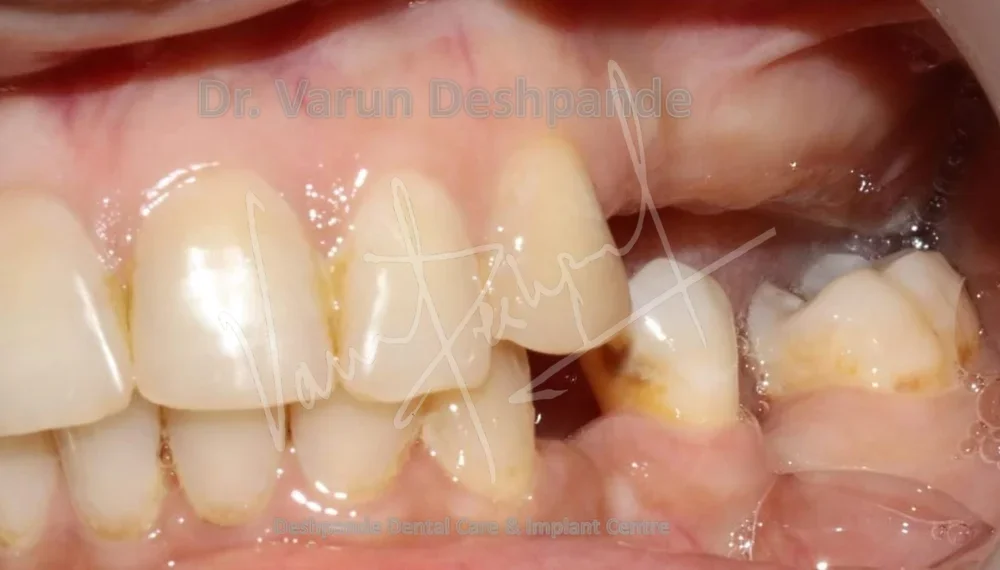
- Heavily damaged teeth need their own assessment, and a different restoration such as a crown may be considered. A crown covers the whole tooth while a veneer covers only the front, and neither is better in every case.
How do you choose between them?
Composite may be worth discussing when you want to keep tooth preparation as small as possible and are comfortable with the possibility of repairs in future. Porcelain may be worth discussing when a made-to-fit ceramic shell suits the tooth and bite, and you accept that tooth preparation is usually involved.
Useful questions to ask at your consultation:
- How much enamel will be removed for each option?
- Will the composite be placed directly, or made by another method?
- What happens if the veneer chips, stains or comes loose?
- What does the estimate include, such as any treatment needed beforehand?
Caring for veneers
Veneered teeth are still natural teeth underneath, and decay can develop around or beneath a veneer. To look after them:
- Brush with fluoride toothpaste and clean between your teeth every day.
- Do not use veneered teeth to open packets or bite hard objects.
- Keep up regular dental check-ups.
When to contact your dentist
Contact your dentist promptly if a veneer does not feel right after it is placed, feels loose, or if the tooth becomes sensitive to hot or cold.
Planning veneers in Solapur
At Deshpande Dental in Solapur, Dr. Varun Deshpande, a prosthodontist, assesses your teeth, gums and bite before discussing composite or porcelain options. Digital shade matching can help match colour where appropriate. Read more about dental veneers, then book a consultation at one of our Solapur clinics.