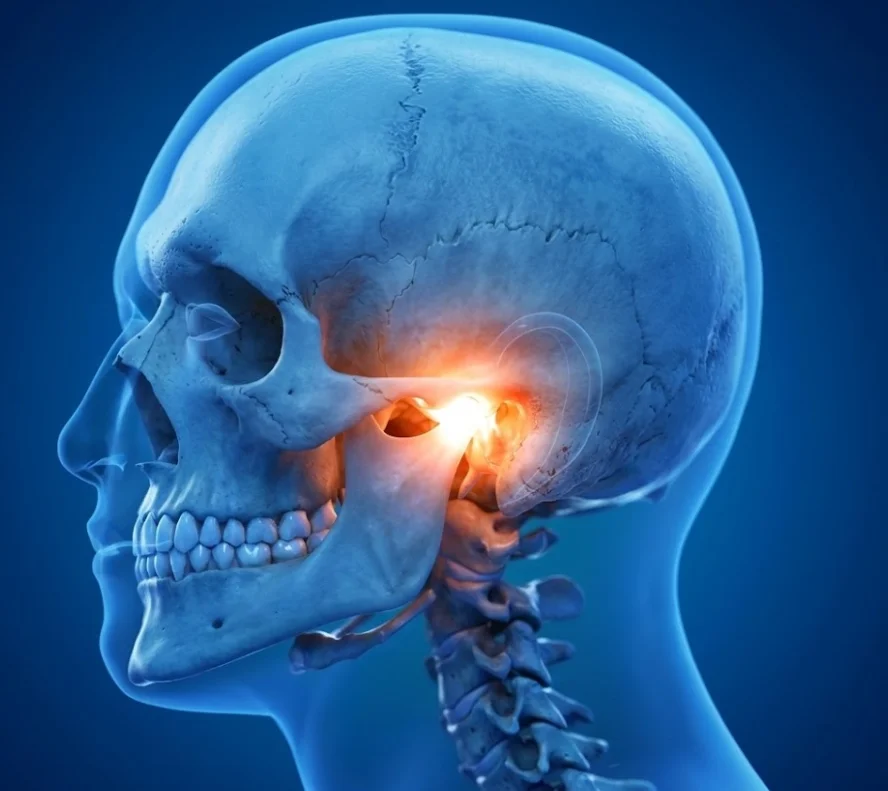
Do I Need Full Mouth Rehabilitation?
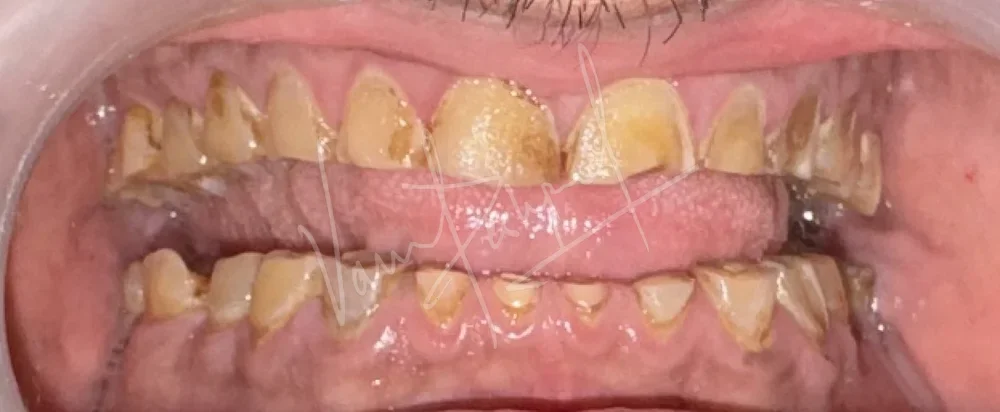
You may need full mouth rehabilitation if many teeth across your mouth are missing, broken, badly worn or have large old fillings and crowns that are failing, so that fixing one tooth at a time no longer makes sense. It is not a single procedure but a planned combination of treatments to rebuild or replace teeth, aimed at chewing comfortably as well as how your smile looks. Having worn or chipped teeth does not by itself mean you need it: many worn teeth are watched and protected rather than crowned.
What does full mouth rehabilitation actually mean?
Full mouth rehabilitation (also called full mouth reconstruction) means rebuilding or replacing teeth across the whole mouth in one coordinated plan. It looks at how the teeth work together when you bite and chew, not just at appearance (American College of Prosthodontists).
The plan is different for every person. On teeth that can be kept, it may combine crowns, bridges and other restorations. Complex cases can also need input from more than one kind of dental specialist.
Signs it may be worth asking about
These situations can lead to a full mouth assessment:
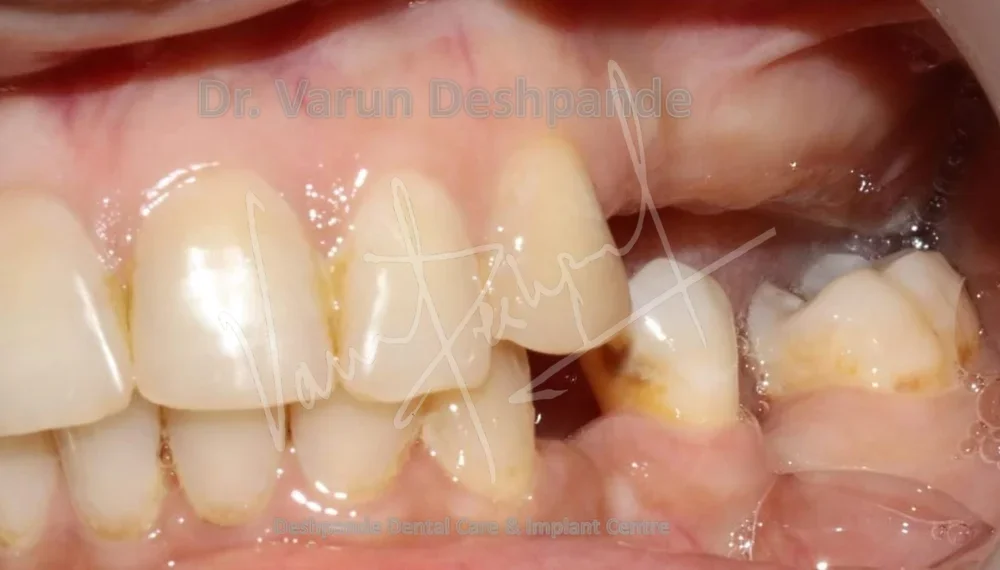
- Several missing teeth, especially in different parts of the mouth.
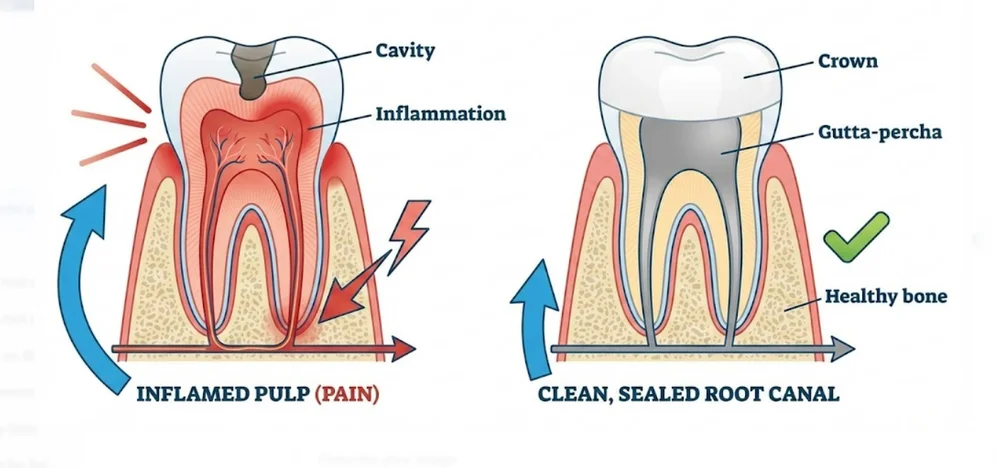
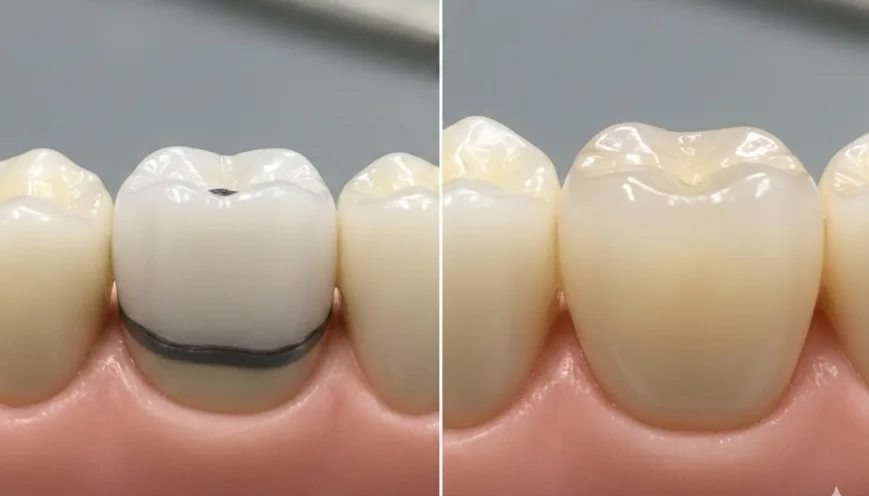
- Many large fillings or old crowns that keep breaking or failing. A crown can restore a broken or badly weakened tooth, or one with a large filling and little natural tooth left.
- Broken or cracked teeth in more than one area.
- Wear that is getting worse or causing problems, such as sensitivity, sharp edges or difficulty chewing.
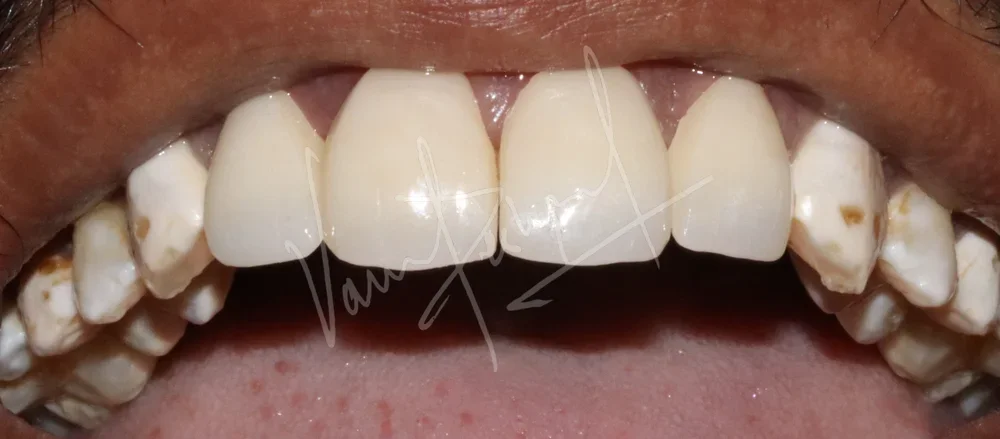
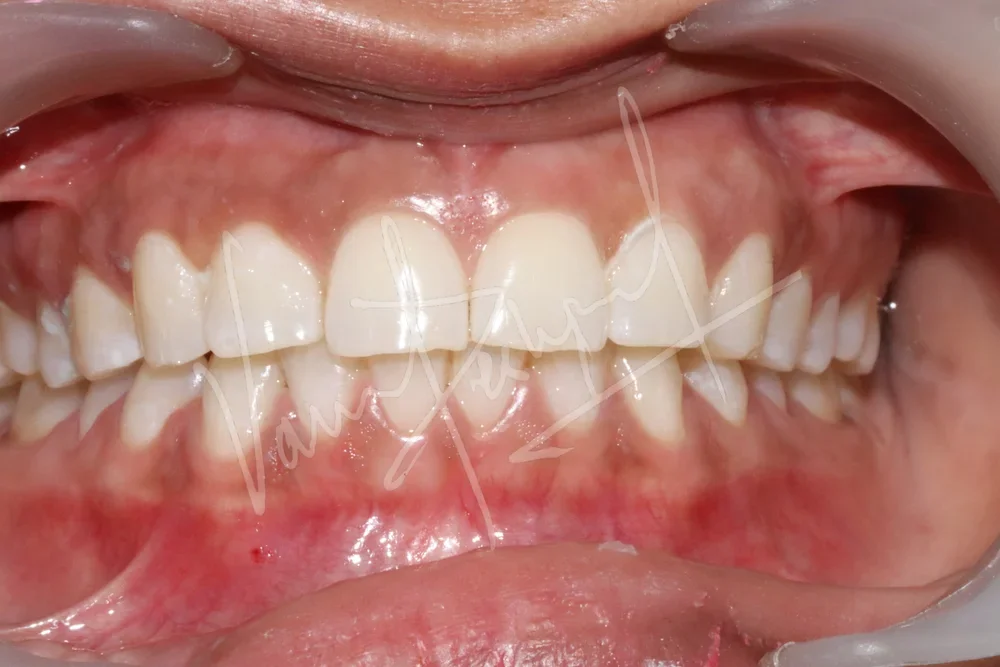
- Severe wear across many teeth. Badly worn teeth can be one reason for comprehensive treatment, once the cause and extent have been assessed.
None of these signs automatically means you need the whole mouth treated. They are reasons to have a proper examination.
Does every worn tooth need a crown?
No. Some wear is normal (dentists call it physiological wear). The dentist's first job is to tell normal wear apart from abnormal, damaging wear (pathological wear) (European consensus on severe tooth wear).
Even with severe wear, expert guidance puts diagnosis, prevention, advice and monitoring first. Restoring the teeth depends on how severe the wear is, what problems it is causing and what you want, and it does not always need to happen straight away. Small wear that causes no symptoms can often be monitored using clinical records, while worsening wear or new symptoms can prompt treatment (University Hospitals of Leicester: tooth wear).
When restoration is needed, the consensus favours the least invasive approach that will work, backed by prevention. That matters, because trimming a natural tooth for a crown removes enamel that will not grow back.
What the assessment decides
A full mouth assessment answers several questions before any treatment starts:
- Why the damage is happening. The cause, severity and speed of wear, and how it is affecting you, guide everything else. Grinding or clenching can also complicate planning for crowns.
- Which teeth can be kept, and how healthy your gums are.
- Your risk of decay and how well you can clean, because new crowns and bridges sit on natural teeth that can still decay.
- How your teeth meet when you bite.
- What you want from treatment, and how much treatment you are willing to have.
Treatment options that may be combined
| Approach | When it may be considered | What to know |
|---|---|---|
| Prevention and monitoring | Mild or stable wear, or while the cause is being controlled | No drilling; the teeth are checked over time |
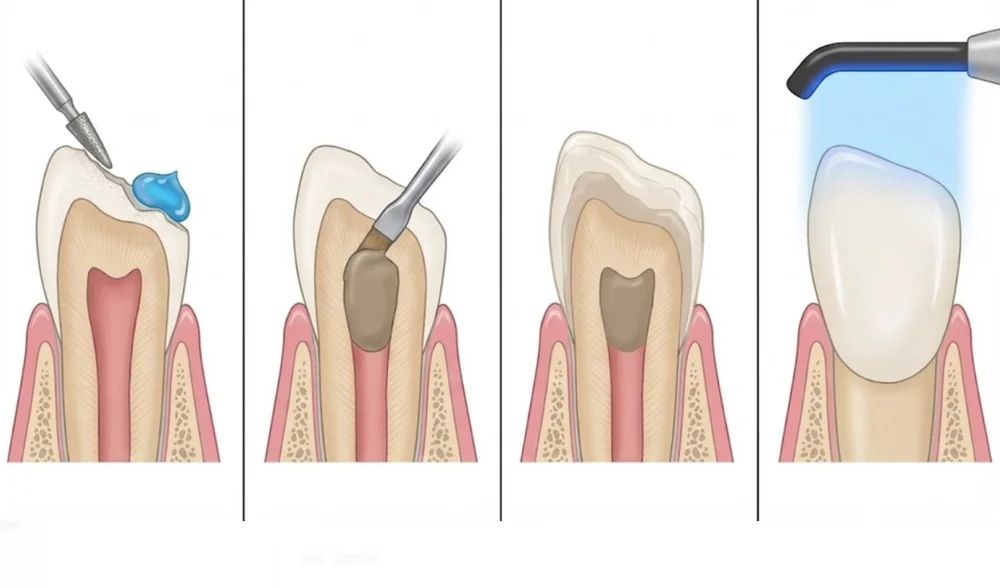
| Tooth-coloured build-ups | Worn teeth with enough tooth left | Your bite may feel unfamiliar at first |
| Crowns or onlays made in a dental laboratory | Teeth that have lost more structure | The tooth is trimmed, and sensitivity can follow |
| Bridges | Gaps from missing teeth, with suitable teeth either side | The supporting teeth are trimmed for crowns |
| Dentures or overdentures | Selected cases of severe or widespread wear | Removable; chosen after assessment |
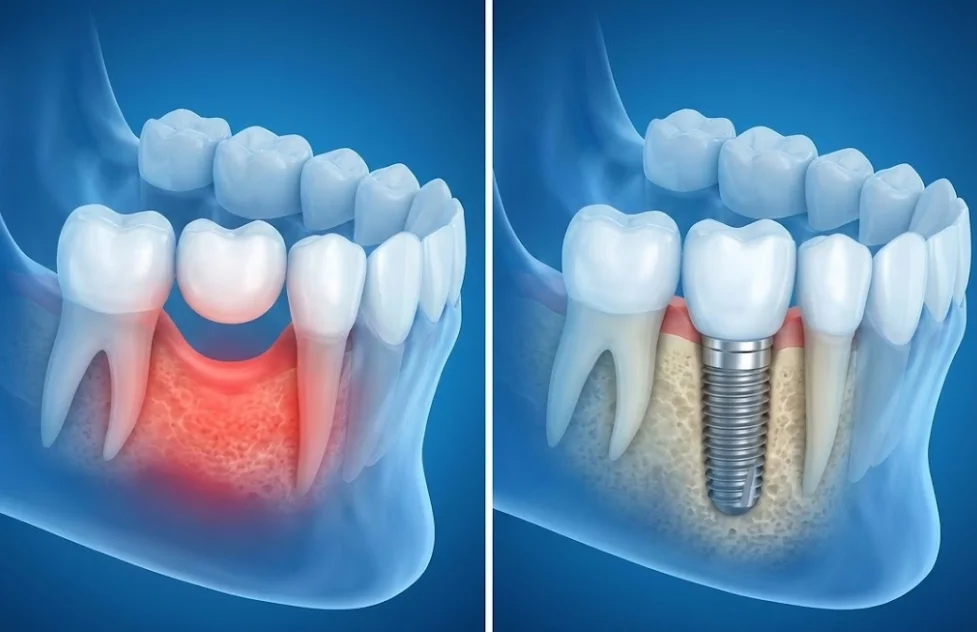
These are possibilities after examination, not a fixed sequence (Bristol Dental School: tooth wear). Missing teeth can also be replaced with implants or a removable denture, or a suitable gap may be left, depending on your situation. If your main concern is a missing tooth, our guide to implants vs bridges compares those two options.
What is treatment like?
Rebuilding worn or damaged teeth can take several long appointments. For crowns, the teeth are prepared, impressions or digital scans are taken, and each crown is checked for fit and comfort before it is cemented. If tooth-coloured build-ups are used to restore worn teeth, your bite may feel different at first.
Looking after the result
Restorations are not maintenance-free. Those placed for worn teeth can later chip, fracture, wear further, loosen or need repair. How long crowns last varies with care and individual circumstances. Regular dental checks look at both your teeth and the work.
At home:
- Brush twice a day with fluoride toothpaste and clean between your teeth daily.
- Clean underneath any bridge's false tooth.
- Avoid biting hard objects.
- Cut down how often you have sugary food and drinks, to protect the natural tooth around crowns.
- Keep up the prevention aimed at whatever caused the damage in the first place.
When to see a dentist sooner
Arrange a dental check, rather than waiting for a routine visit, if a crown or bridge becomes loose, cracks or develops a sharp edge, or if chewing on it hurts. If you are being monitored for wear, tell your dentist when the wear seems to be getting worse or you notice sensitivity, sharp edges or difficulty chewing. That does not always mean treatment is needed, but it is worth reassessing.
Getting a full mouth assessment in Solapur
At Deshpande Dental in Solapur, full mouth rehabilitation is led by Dr. Varun Deshpande, a prosthodontist. If jaw pain or headaches are your main concern, read about headaches and TMJ disorder. You can read more about our full mouth rehabilitation care, then book a consultation at one of our Solapur clinics to find out whether you need a full plan or something much simpler.